Where you hire changes how you hire.
Compare major freelance platforms, marketplaces and direct-hire options before committing to a process, fee structure or workflow.
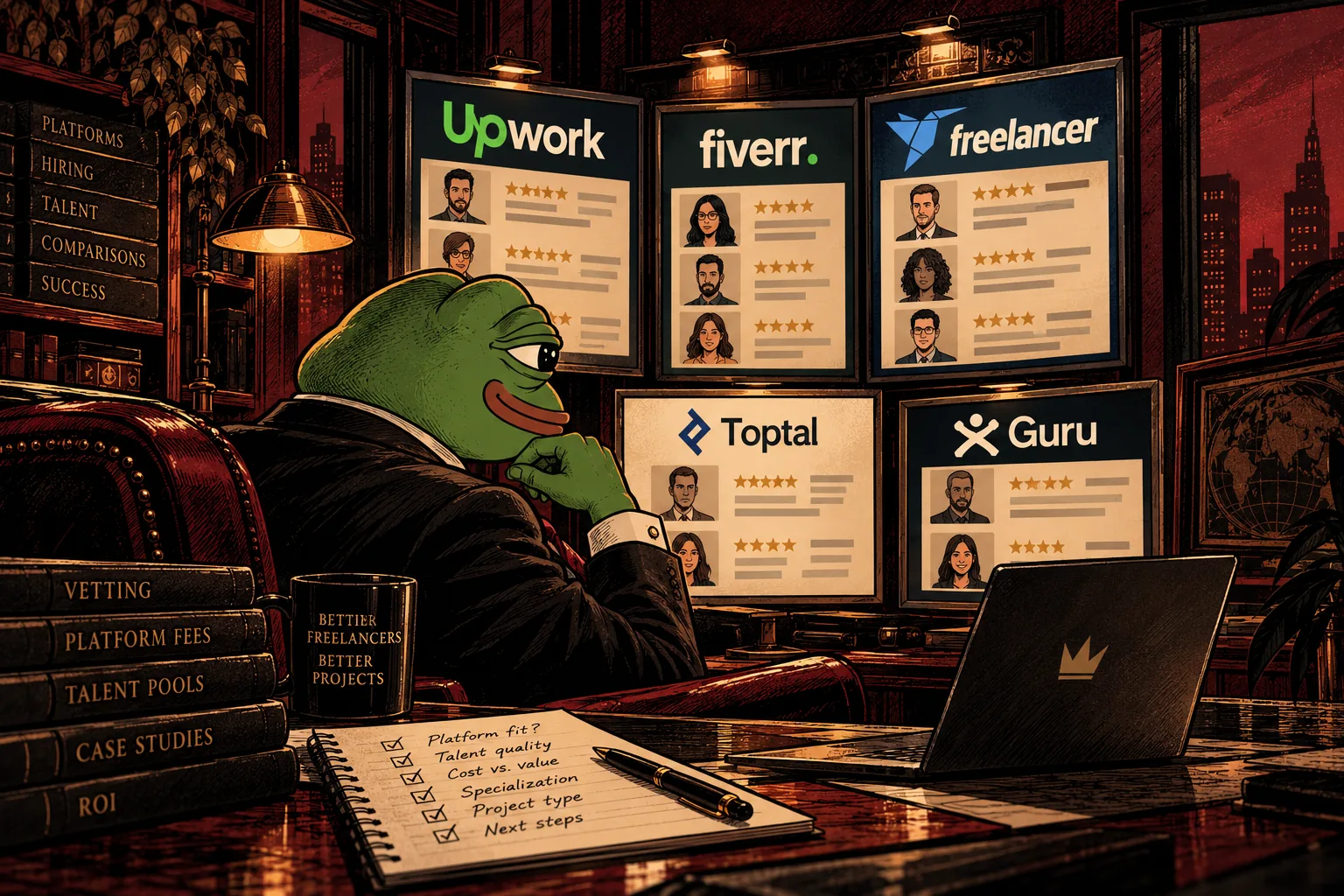
Browse hiring platforms
Compare how each hiring option works, what kind of buyer it may suit, what costs or restrictions matter and which alternatives are worth considering.
Upwork
Large marketplace with broad freelancer coverage and structured hiring workflows.
Major MarketplaceFiverr
Service-based marketplace built around packaged offers and fast browsing.
Independent TalentContra
Portfolio-driven independent work platform with a different marketplace model.
Premium TalentToptal
Curated talent network aimed at buyers seeking screened professionals.
MarketplaceFreelancer.com
Large global marketplace with bidding-based hiring.
Design Focus99designs
Design-focused hiring platform with contests and direct engagement.
Direct HireUse professional networks and direct outreach to source freelance talent.
Community SourcingFind independent freelancers through communities, niche subreddits and direct contact.
AlternativeDirect Hiring
Hire outside a marketplace and manage the relationship yourself.
Keep going
Choosing a platform is only part of the hiring decision; compare the model, understand the costs and plan how the project itself will run.
The platform changes the process around the freelancer.
Buyers often compare platforms as if they were interchangeable directories. They are not. Different hiring channels change discovery, communication, payment structure, dispute handling, fees and how much project administration remains with the buyer.
What buyers should compare
Marketplace or direct hire?
Marketplaces can simplify discovery and provide a structured transaction environment. Direct hiring can provide more control and flexibility, but the buyer must handle more of the vetting, agreement and payment process independently.
Platform protection does not replace project structure
Even when a marketplace offers payment or dispute systems, buyers still need clear deliverables, review criteria, milestones, account ownership and final handoff expectations.
Do not choose a freelance platform by brand recognition alone.
The useful comparison is not simply which site has the most freelancers. Buyers should also compare how talent is discovered, how work is priced, what fees apply, how payments are handled and how much control remains with the buyer.
Start with the kind of hiring experience you want
Some buyers want a large marketplace with many candidates. Others want screened talent, packaged services, niche communities or a direct relationship outside a marketplace. The right environment depends on how much sourcing, screening and project administration you want to handle yourself.
Compare platform costs before comparing hourly rates
The freelancer's quoted rate is only part of the buyer's total cost. Marketplace fees, transaction charges, project management overhead and the cost of replacing a poor hire can all change the economics of the project.
Compare the major platform choices directly
Head-to-head comparisons are useful when two hiring channels solve similar problems but differ in pricing model, candidate discovery, screening or workflow.
Platform safeguards are only one layer of protection
A marketplace can provide structure around payment or disputes, but buyers still need to evaluate the freelancer, define the work clearly and preserve control over important accounts, files and project assets.
Structure the project after choosing the hiring channel
Once the platform is chosen, the next job is defining deliverables, review points, revisions, ownership and handoff. A good hiring channel cannot compensate for an undefined project.